Capital Gains Tax on Shares From Work: EMI, CSOP, SAYE and SIP
Shares you get through your job are taxed twice over in different ways: sometimes Income Tax when you acquire them, then Capital Gains Tax on any rise after that. The link between the two is your CGT cost. For shares from an option, HMRC says the cost is the price you paid on exercise plus any amount charged to Income Tax on the exercise.1 Get that right and you are only taxed once on each pound of value. SIP shares sold straight from the plan carry no CGT at all,4 SAYE and SIP shares moved into an ISA within 90 days escape it,34 and EMI shares can qualify for Business Asset Disposal Relief at 18% two years after the option was granted.67
- Option shares: CGT cost = exercise price paid + amount charged to Income Tax on exercise.1
- EMI: options worth up to £250,000 in a 3-year period; most companies with assets of £120 million or less and fewer than 500 full-time employees qualify (before 6 April 2026: £30 million and 250).2
- SAYE: save up to £500 a month for 3 or 5 years; no CGT if the shares go into an ISA within 90 days of leaving the scheme.3
- SIP: no CGT on shares sold from the plan; shares taken out start with their market value on the day they leave.41
- CSOP: options over up to £60,000 of shares (for grants from 6 April 2023).5
Why the CGT cost includes what you were taxed on
Picture an unapproved option to buy 2,000 shares at £1 each, exercised when the shares are worth £4. The £3-a-share discount, £6,000 in all, is employment income and goes through Income Tax. You then sell at £6. If you only counted the £2,000 you paid as your cost, the £6,000 would be taxed a second time as part of the gain. HS287 prevents that: the cost is the price you pay for the shares on exercise plus the amount chargeable to Income Tax on the exercise.1
| CGT cost (£2,000 paid + £6,000 taxed) | £8,000 |
| Proceeds | £12,000 |
| Gain | £4,000 |
| CGT for 2026/27 (£55,000 income) | £240 |
| The wrong gain if the income element is left out | £10,000 |
After the £3,000 allowance the correct gain leaves £240 to pay. The mistaken figure would have added tax on £6,000 already taxed through payroll.
EMI options
Enterprise Management Incentives let a qualifying company give you options over shares worth up to £250,000 in a 3-year period.2 From 6 April 2026 most companies with assets of £120 million or less and fewer than 500 full-time employees can use the scheme; the old limits were £30 million and 250 employees. You must work at least 25 hours a week, or 75% of your working time, for the company.2
If you buy the shares for at least the market value they had when the option was granted, there is no Income Tax or National Insurance. If the option was at a discount, the difference is taxed.2 For CGT, HS287 says the cost of EMI shares is what you pay for them together with the amount charged to Income Tax, if any.1
EMI and Business Asset Disposal Relief
EMI shares get an easier route into BADR than ordinary company shares. GOV.UK's eligibility rules say you qualify if you were given the option at least 2 years before selling, and the shares were bought after 5 April 2013; the 5% shareholding test that applies to other shares is not part of the EMI route.6 The BADR rate is 18% for 2026/27.7
| CGT cost (nothing taxed as income) | £10,000 |
| Gain | £40,000 |
| CGT at normal rates | £8,880 |
| CGT with BADR | £6,660 |
With £55,000 of other income no basic rate band is left, so without BADR the gain above the allowance is taxed at 24%; BADR brings the rate to 18%. BADR also has a lifetime limit; our BADR calculator handles earlier claims and the order the allowance is used in.
Sharesave (SAYE)
You save up to £500 a month for 3 or 5 years and can then use the savings to buy shares at the option price. There is no Income Tax or National Insurance on the difference between what you pay and what the shares are worth.3 For CGT, the cost is usually what you pay when you exercise the option.1
That leaves the whole rise since the option was granted to be taxed as a gain when you sell, which is why the ISA route matters. You will not pay CGT if you move the shares into an ISA within 90 days of taking them out of the scheme. You can also transfer them to a pension directly from the scheme when it ends; if you do it later, within 90 days, CGT may apply to any rise in the meantime.3 HS287's 2026 edition says that in the year to 5 April 2026 you could transfer shares worth up to £20,000 into an ISA from a SIP or SAYE scheme, subject to conditions.1 Our ISA guide explains why gains inside the wrapper are not taxed.
| CGT cost | £7,200 |
| Gain | £4,800 |
| CGT for 2026/27 (£35,000 income) | £324 |
| CGT if moved into an ISA within 90 days and sold there | £0 |
Share Incentive Plans (SIP)
A SIP can give you up to £3,600 of free shares a tax year, let you buy partnership shares from pre-tax salary (the lower of £1,800 and 10% of your income for the year), and add up to 2 matching shares for each one you buy.4 Shares kept in the plan for 5 years carry no Income Tax or National Insurance.4
The CGT rule is unusually generous. Shares sold while they are still in the plan are free of CGT.4 If you take them out and keep them, HS287 says your cost for capital gains is their market value on the date they leave the plan,1 so only growth after that point is taxable. Moving them into an ISA within 90 days of leaving the plan also avoids CGT.4
Company Share Option Plans (CSOP)
A CSOP gives options over up to £60,000 of shares for options granted from 6 April 2023 (£30,000 before then). Buy the shares between 3 and 10 years after you were offered them and there is no Income Tax or National Insurance on the difference between what you pay and what they are worth.5 You may have to pay CGT when you sell.5 As with any option, the CGT cost is the exercise price plus anything that did get charged to Income Tax on exercise,1 which for a CSOP exercised inside that window will usually be nothing.
When the option dies, and other awkward cases
- Lapsed options. If you never exercise and the option lapses, you do not make an allowable loss for CGT.1
- Shares bought the same day. Shares of the same class acquired on the same day are normally pooled, but you can elect to split same-day acquisitions into two categories, which may reduce your tax.1
- Other shares in the same company. If you also bought shares in your employer on the market, our section 104 pool guide explains the order in which a sale is matched with your holdings.
- Reporting. Where you make a claim or election on employee scheme shares, HS287 tells you to put the code ESH in box 36 for listed shares or box 20 for unlisted shares on the capital gains pages.1
If your employer is bought out and you take cash and shares in the buyer, our takeover guide shows how the cost is split. For selling a company you control, rather than shares from a scheme, start with CGT on selling a business.
Frequently asked questions
What is my base cost for shares from a share option?
HMRC's helpsheet HS287 says the CGT cost is the price you pay for the shares when you exercise the option plus any amount charged to Income Tax on the exercise. Leaving out the income-taxed amount means paying tax twice on the same value.
Do I pay CGT on SAYE shares?
You may when you sell, on the rise above what you paid. You do not pay CGT if you move the shares into an ISA within 90 days of taking them out of the scheme, or transfer them to a pension directly from the scheme when it ends.
Can EMI shares qualify for Business Asset Disposal Relief?
Yes, if you were given the option at least 2 years before you sell and the shares were bought after 5 April 2013. Unlike other company shares, there is no 5% shareholding test for EMI shares. BADR is 18% for 2026/27.
Is there CGT when I sell shares kept in a Share Incentive Plan?
No CGT is due on shares sold while they are still in the plan. If you take them out and sell later, your CGT cost is their market value on the day they left the plan.
Can I claim a loss if my share option lapses?
No. HS287 says that if you do not exercise an option and it lapses, you do not make an allowable loss for CGT.
General information for UK residents, not tax advice. Your employer's scheme documents decide what you can do and when. Figures for 2026/27 disposals.
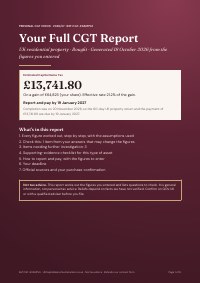
Before you go
Your Full CGT Report
- Every 2026/27 figure worked out from your own numbers
- Your deadline, and what to report and when
£4.99 one-off · instant download · full refund via our contact page
Sources & references
The rates, allowances and rules in this guide are drawn from the official HMRC and GOV.UK sources below, checked for the 2026/27 tax year. Each link opens the relevant government page in a new tab.
- HS287 Capital Gains Tax and employee share schemes (2026) (checked 27 Nov 2026) www.gov.uk/government/publications/employee-share-and-security-schemes-and-capital-gains-tax-hs287-self-assessment-helpsheet/hs287-capital-gains-tax-and-employee-share-schemes-2026
- Tax and Employee Share Schemes: Enterprise Management Incentives (checked 27 Nov 2026) www.gov.uk/tax-employee-share-schemes/enterprise-management-incentives-emis
- Tax and Employee Share Schemes: Save As You Earn (SAYE) www.gov.uk/tax-employee-share-schemes/save-as-you-earn-saye
- Tax and Employee Share Schemes: Share Incentive Plans (checked 27 Nov 2026) www.gov.uk/tax-employee-share-schemes/share-incentive-plans-sips
- Tax and Employee Share Schemes: Company Share Option Plan (checked 27 Nov 2026) www.gov.uk/tax-employee-share-schemes/company-share-option-plan
- Business Asset Disposal Relief: eligibility www.gov.uk/business-asset-disposal-relief/eligibility
- Capital Gains Tax: rates and the £3,000 allowance for 2026 to 2027 (checked 22 Nov 2026) www.gov.uk/capital-gains-tax/rates